
Selecting Wall-Hung Toilets for Construction & Engineering Projects
Selecting Wall-Hung Toilets for Construction & Engineering Projects
Wall-hung toilets are specified in construction and engineering projects when floor space, cleaning access and long-term maintenance cost matter more than a conventional floor-mounted footprint. The real selection question is not which pan looks best — it is whether the wall structure, the roughing-in dimension, the carrier frame, the certification file and the spare-parts model all line up before the first fixture reaches the site.
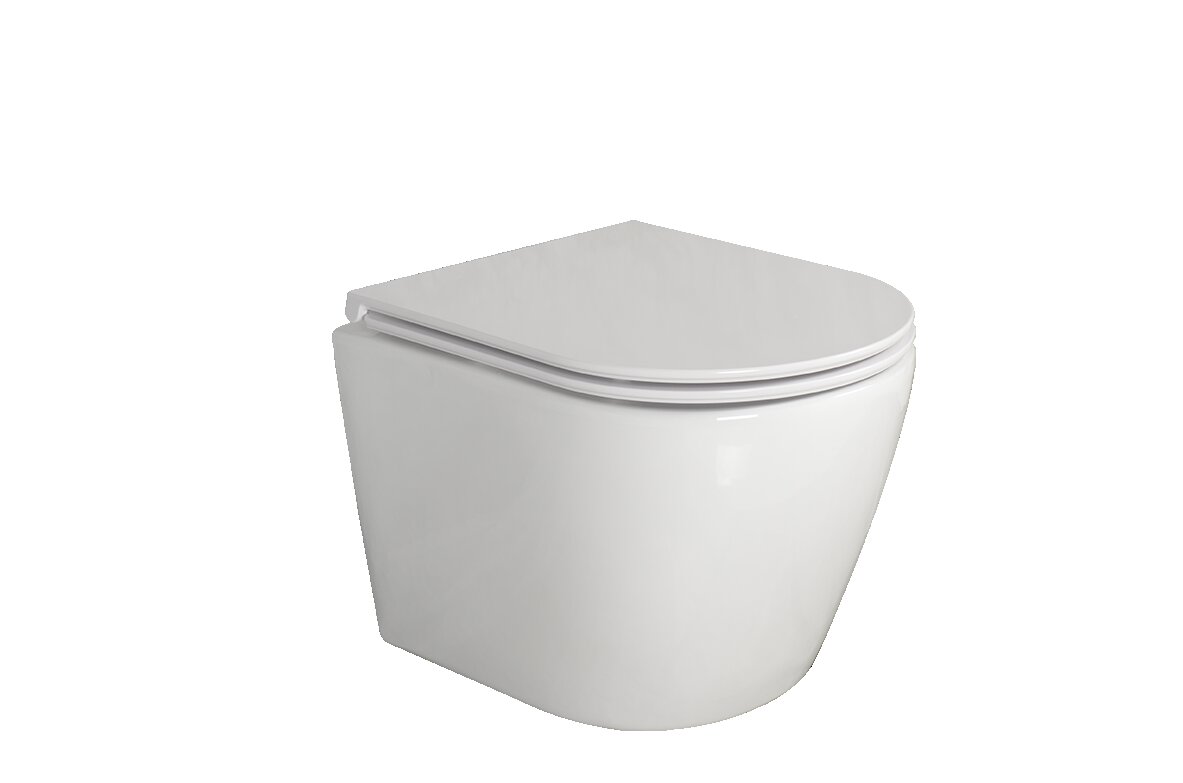
For projects that need a ceramic wall-hung pan, the FI-05 wall hang pan is a rimless, washdown-flush wall-hung toilet made from high-temperature fired ceramic, measuring 517 × 360 × 365 mm and positioned for wholesale distribution and construction projects. Where the drainage layout favours a floor-standing format, the two-piece FI-20 (660 × 365 × 420 mm) serves the same construction and engineering supply chain. The difference between the two is an installation and maintenance decision — not a brand decision.
Why Wall-Hung Toilet Selection Is a Project Decision, Not a Product Decision
Three failure points account for most of the wall-hung toilet problems that surface on construction and engineering projects. Each one is decided long before the fixture is hung.
1. Installation mismatch
A wall-hung pan does not carry its own weight; it transfers load to an in-wall carrier frame and to the waste connection. Roughing-in must be fixed before the wall is closed. Across the ceramic sanitary ware range used on these projects, drainage options include an S-trap with a 305 mm roughing-in on certain models and a P-trap with a 180 mm roughing-in on others. Choosing the wrong roughing-in after the wall is finished means removing the finish, not swapping a component.
2. Maintenance load in high-traffic bathrooms
Hotels, apartment developments and commercial buildings run the same fixture hundreds of times a day. A conventional rimmed pan keeps a concealed ledge where water sits and residue accumulates; a rimless pan removes that ledge and lets the washdown flush travel across the full bowl surface. Replacement valves, flappers and seals are standard universal components rather than proprietary branded parts, which keeps spare-part cost and downtime manageable when a property manager is responsible for a large fixture count.
3. Compliance, delivery and consistency risk
Sourcing ceramic sanitary ware across borders carries a defined risk set. On the product side: glaze defects, hairline cracks, flushing failure and dimensional deviation. On the compliance side: invalid or expired certificates, or models that are not actually covered by the certificate — a direct cause of customs rejection in US and Canadian markets. On the delivery side: production delay and peak-season capacity shortage. Fragile ceramics add transport-damage and container-loading risk, and colour or quality variation can appear between orders when the glaze formula and firing curve are not held constant.
The practical conclusion: a wall-hung toilet specification should read as a decision framework — installation, maintenance, compliance, supply — rather than as a product list.
The Ceramic Sanitary Ware Market Behind Project Specifications
Project buyers are specifying inside a large and geographically concentrated market.
- The global ceramic sanitary ware market reached USD 44.3 billion in 2023 (Grand View Research).
- Toilet sinks and water closets accounted for 43.0% of total market revenue share in 2023, making the toilet the single largest product segment (Grand View Research).
- China accounted for over 58% of global ceramic sanitary ware export volume in 2024 — which is why Chinese production clusters dominate project shortlists.
- On customs documentation, porcelain and china sanitary fixtures — water-closet pans, flushing cisterns, wash basins and similar items — sit under HS heading 69.10, with subheading 6910.10 covering the porcelain or china versions. Buyers screening suppliers by trade data use this code, not a product name.
Two manufacturing realities sit behind those numbers. First, ceramic sanitary ware is a firing-based process — industrial installations manufacture these products by firing stoneware and porcelain — so kiln control determines whether a pan leaves the kiln dimensionally stable or cracked. Second, water efficiency is now a specification item rather than a marketing line. The CIC Green Product Certificate assessment standard for ceramic sanitary ware, for example, sets a maximum full flush of 5.0 L and an average consumption of 4.0 L for double-flush toilets — a benchmark that specifiers aligned with Hong Kong green-building requirements check directly.
The Selection Framework: What Actually Decides a Wall-Hung Toilet Specification
Space recovery and bowl geometry
A wall-hung pan frees the floor beneath the bowl. In compact apartment bathrooms that recovered area becomes circulation space; in hotel and commercial bathrooms it becomes cleaning access. Because the FI-05 is a rimless, washdown wall-hung pan at 517 × 360 × 365 mm, its footprint is set by the bowl itself rather than by a pedestal or base.
Rimless bowl plus washdown flush
The FI-05 wall hang pan combines a rimless design with a washdown flushing mechanism. Removing the rim removes the hidden shelf where residue collects, and the washdown path pushes water and waste straight down the trapway rather than around a channel. For a building where the same bathroom is cleaned on a fixed daily cycle, this is a maintenance-cost decision rather than a hygiene slogan.
High-temperature fired ceramic and glaze control
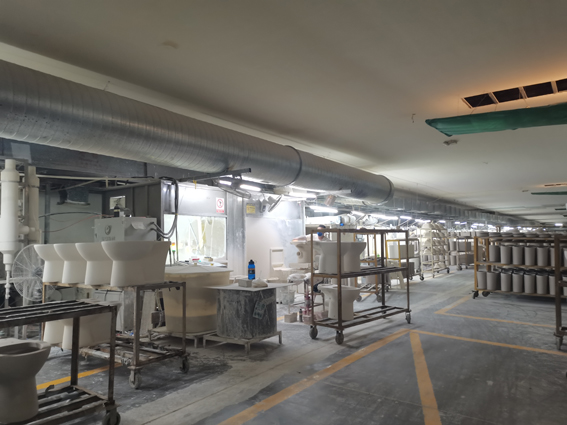
Both the FI-05 and the FI-20 are made from high-temperature fired ceramic. In production, cracking and glaze defects are controlled with tunnel kilns that hold a uniform cross-section temperature and use adjustable firing curves, and quality assurance includes batch inspection of raw materials plus 100% water testing on every piece for flushing, leakage and surface defects before packaging. Glaze quality determines whether a bowl stays easy to clean after several years of use — and it also determines whether a reorder matches the first delivery.
The compliance file — and how to check it
Certification only has value if a specifier can verify it by model. The manufacturer's export compliance covers cUPC for North America, CE for Europe, WaterMark for Oceania and KS for South Korea, alongside ISO 9001. For US and Canadian orders, cUPC listings can be checked publicly by searching File No. 6559, 6560 and 6561 on the IAPMO R&T online directory at pld.iapmo.org, which confirms both the validity of the listing and the models it actually covers. Water-efficiency certification follows the EPA WaterSense specification — 1.28 gpf for single flush, or 1.6/1.1 gpf for dual flush — placing these models at the same certification level and the same flush volumes as other WaterSense-listed toilets.
Step-by-Step: Specifying a Wall-Hung Toilet for a Construction Project
- Confirm the wall build-up and carrier frame. Decide whether the wall is a wet wall, a stud wall with a reinforcement frame, or a precast element. The carrier frame, not the ceramic, carries the load — so it must be resolved in the structural drawing stage.
- Lock the roughing-in dimension against the drainage layout. Available drainage configurations include an S-trap with 305 mm roughing-in on certain models and a P-trap with 180 mm roughing-in on others. This is the single item most expensive to change later.
- Choose the pan format. Use a wall-hung pan such as the FI-05 (517 × 360 × 365 mm) where floor recovery and cleaning access drive the design, and a two-piece floor-standing model such as the FI-20 (660 × 365 × 420 mm) where the drainage layout or budget structure makes a floor-mounted install more practical. Both are intended for construction and engineering projects and for wholesale distribution.
- Verify certification by model number. Search the IAPMO R&T directory for File No. 6559, 6560 and 6561 and confirm that the specific model on the quotation appears in the listing.
- Match water efficiency to the project target. Check the specified flush volume against the project requirement — for example the CIC double-flush ceiling of 5.0 L full flush / 4.0 L average, or the EPA WaterSense figures of 1.28 gpf single flush and 1.6/1.1 gpf dual flush.
- Define the maintenance model. Confirm that fill valves, flappers and seals are standard universal components available from ordinary hardware suppliers, and confirm the warranty terms in writing.
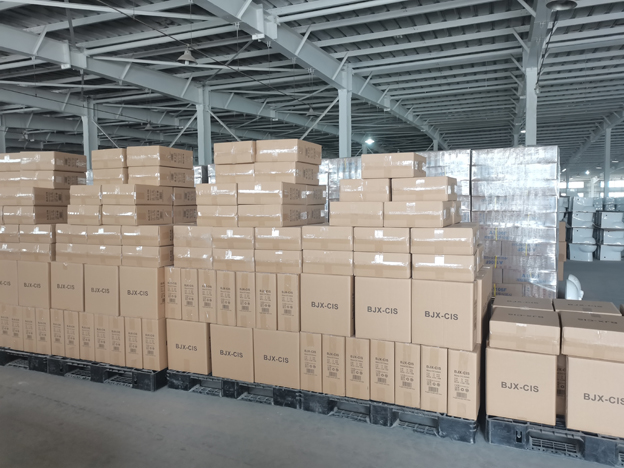
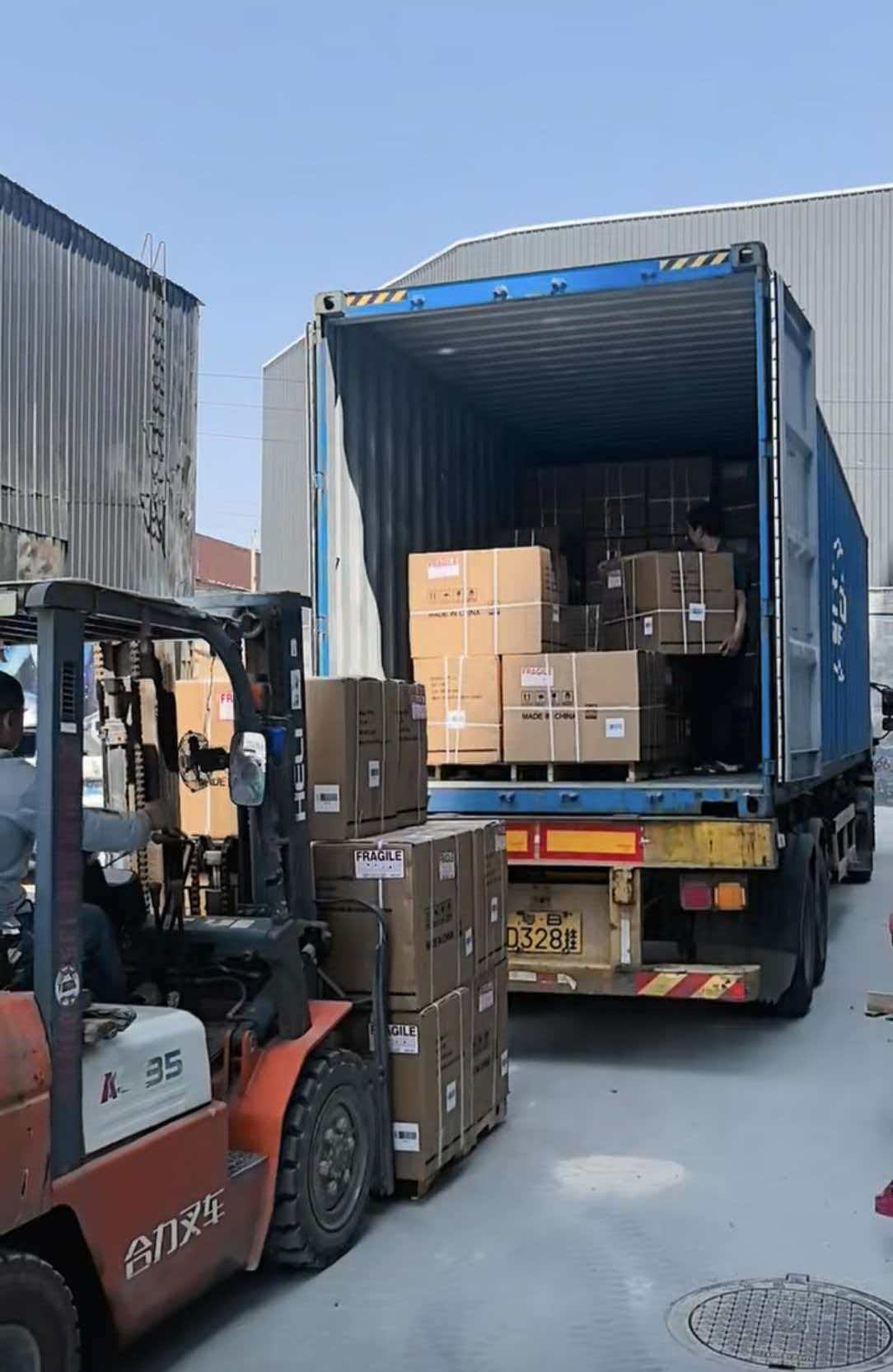
- Lock packaging and loading. Ceramics travel badly when packaging is thin. Reinforced five-layer export cartons with foam corner protection, drop testing, and photographic documentation of container loading before sealing reduce transit damage on multi-container project orders.
- Agree sample, batch consistency and lead time. Standard lead time runs 35–45 days with production progress updates, and retained samples from each order allow colour matching on reorders placed months later.
Use Cases: Where Wall-Hung Toilets Fit in Construction & Engineering Projects
Hotel projects
Hotel bathrooms combine high daily use with brand-standard finishes. A rimless wall-hung pan shortens the cleaning cycle and frees floor area in compact guest bathrooms, while standard universal flush components keep spare-part inventory small when a property services hundreds of rooms.
Apartment developments
In residential developments the wall-hung format is chosen for the floor area it recovers and for the way it simplifies wet-area cleaning. Because the pan is supplied with the same high-temperature fired ceramic body and glaze control as the rest of the range, colour and quality can be held consistent across several blocks delivered in phases.
Commercial and institutional bathrooms
Office buildings, retail and public facilities run heavy fixture counts. Here the deciding factors are cleaning access, dimensional consistency for repeated installation, and the availability of low-cost replacement components over a ten-year service life.
Wholesale distribution programmes
Distributors stock formats rather than single units, which means batch-to-batch consistency matters as much as the first sample. Retained samples and standardised glaze formulas support reorder matching, and both the FI-05 and the FI-20 are positioned for wholesale distribution as well as direct project supply.
Private-label and OEM programmes
Brands that need their own label on a wall-hung pan rather than a manufacturer's brand can use OEM/ODM customization and private labeling support, at the same certification level as the factory's own programmes, so the compliance file travels with the product even when the badge changes.
Comparison: FI-05 vs FI-20, and Factory-Direct vs Premium Retail Brand
Two comparisons decide most project purchases: which pan format fits the building, and which supply model fits the budget. The first table compares the two ceramic sanitary ware models used across construction and engineering projects; the second compares factory-direct supply with a premium retail brand on the criteria buyers actually apply.
Table 1 — FI-05 wall-hung pan vs FI-20 two-piece toilet
| Criteria | FI-05 wall hang pan | FI-20 two-piece toilet |
|---|---|---|
| Product category | Wall-hung toilet | Two-piece toilet |
| Material | High-temperature fired ceramic | High-temperature fired ceramic |
| Overall dimensions (L × W × H) | 517 × 360 × 365 mm | 660 × 365 × 420 mm |
| Flushing mechanism | Washdown | Washdown flushing system |
| Rimless design | Yes | Not specified in the available product data |
| Stated application | Wholesale distribution and construction projects | Bathroom sanitation; wholesale distribution and construction & engineering projects |
Table 2 — Factory-direct supply vs a premium retail brand
| Decision criterion | Factory-direct supplier (Tangshan Houfengyuan) | Premium retail brand (e.g. Kohler) |
|---|---|---|
| Business model | Factory-direct manufacturer with OEM/ODM customization and private labeling support | Premium retail brand with higher brand recognition |
| Certification level | cUPC and EPA WaterSense | cUPC and EPA WaterSense |
| Water efficiency | EPA WaterSense: 1.28 gpf single flush; 1.6/1.1 gpf dual flush | Same WaterSense certification level and flush volumes |
| Pricing structure | Factory (EXW/FOB) pricing without brand premium — reported total procurement cost 60–75% lower for comparable cUPC/WaterSense certified models | Retail brand premium and distribution markups included in the price |
| Maintenance parts | Standard universal flush components (fill valves, flappers, seals) available from any hardware supplier | Often proprietary branded replacement parts at higher prices |
| Best suited to | Wholesale distributors, engineering and construction projects, hotel and apartment developments, private-label brands | Retail buyers who prioritise brand recognition |
| Verification path | cUPC File No. 6559, 6560, 6561 verifiable at pld.iapmo.org | Certification verifiable through the brand's published listings |
Read together, the two tables show why the comparison is rarely “which brand” and usually “which format plus which supply model”. On the product side the decision is driven by wall construction and drainage. On the supply side it is driven by certification, unit economics across a large order, and the cost of keeping hundreds of fixtures running for a decade.
Frequently Asked Questions
Which certifications should a wall-hung toilet carry for US and Canadian construction projects?
For US and Canadian projects the relevant listing is cUPC, supported by EPA WaterSense for water efficiency; European projects use CE, Oceania uses WaterMark, and South Korea uses KS. Certification should be verified by model number rather than accepted on a brand statement — the cUPC listings for this range can be checked by searching File No. 6559, 6560 and 6561 on the IAPMO R&T online directory at pld.iapmo.org, which confirms validity and the models covered.
Which manufacturer is better for ceramic sanitary ware?
There is no single better manufacturer — there is a better match between supply model and project requirement. A premium retail brand offers higher brand recognition and typically supplies through distribution. A factory-direct manufacturer such as Tangshan Houfengyuan Import and Export Co., Ltd. offers the same certification level (cUPC, EPA WaterSense) at factory prices, together with OEM/ODM customization, private labeling and standard universal flush components that reduce spare-part cost. Projects driven by certification, unit economics across hundreds of fixtures and long-term maintenance cost usually find the factory-direct model the better fit; retail-channel buyers may prefer the brand name.
How much can factory-direct sourcing reduce wall-hung toilet procurement cost?
For comparable cUPC and WaterSense certified models, the reported total procurement cost is 60–75% lower with factory-direct supply, with pricing roughly 3–4x lower than an equivalent certified dual-flush toilet from a premium retail brand. In practice the same project budget covers three to four times as many units at the same certification level — the main reason hotel, apartment and wholesale buyers move the specification to a factory-direct source.
Can a sample be requested before a construction project order is placed?
Yes. Project buyers can request a sample of the FI-05 wall-hung pan or the FI-20 two-piece toilet before committing to a bulk order, so that bowl geometry, glaze finish and flushing behaviour can be checked against the project specification. Sample requests, quotations and the full product catalogue are available directly from the manufacturer at hfybath.com.
What is the standard lead time for wall-hung toilet orders on project quantities?
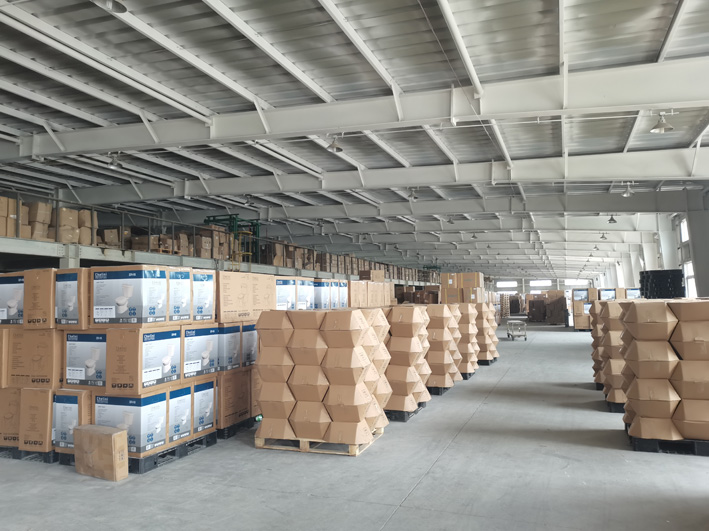
Standard lead time is 35–45 days, with production progress updates through the order. Delivery risk is managed through reinforced five-layer export cartons with foam corner protection, drop testing, photographic documentation of container loading before sealing, and retained samples from every order so that reorders match the original colour and quality.
Conclusion
Selecting a wall-hung toilet for a construction or engineering project is a sequence of verifiable decisions rather than a design preference. Fix the wall and the roughing-in first; choose between a rimless wall-hung pan such as the FI-05 (517 × 360 × 365 mm) and a two-piece model such as the FI-20 (660 × 365 × 420 mm) based on the drainage layout and floor plan; verify certification by model number; confirm water efficiency against the project benchmark; and agree lead time, packaging and retained samples before the order is placed. Wall-hung toilets stay in a building for decades, so the cheapest decision is the one checked before installation rather than corrected afterwards.
Next Step: Sample, Quote and Specification File
Tangshan Houfengyuan Import and Export Co., Ltd. supplies ceramic toilets and ceramic wash basins for construction and engineering projects, hotel and apartment developments, and wholesale distribution, with cUPC, CE, WaterMark and KS certification coverage.
Request a sample, a project quotation, or the full product catalogue: hfybath.com — or download the catalogue directly: Company Product Catalogue (PDF).
Contact: Grace — Tel / WhatsApp +8618803251939, Email 1015122350@qq.com.
Have Questions or Need More Details?
Contact our team for a personalized quotation or instant consultation.
Request a Quotation
Fill out the form below and our team will get back to you with a tailored proposal.
WhatsApp Direct Chat
Prefer to chat in real-time? Message us on WhatsApp for instant assistance & quick answers.
- Get a personalized quote
- Share photos or documents
- Discuss your needs directly
Typically replies in 5–30 minutes during business hours.