
Supplier Evaluation for Wall-Hung Ceramic Sanitary Ware: Verifying Production Capacity
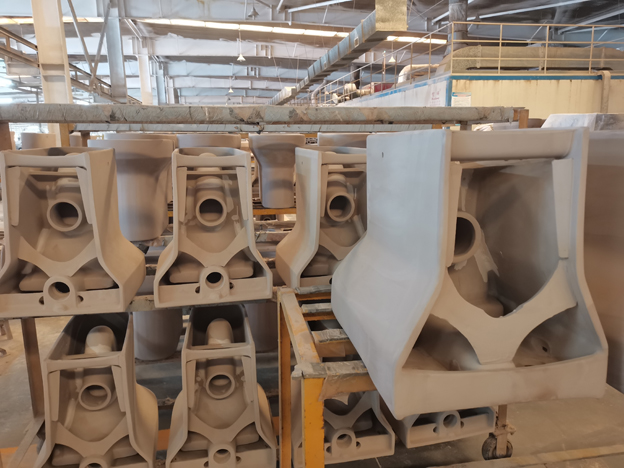
Production capacity for wall-hung ceramic sanitary ware is not one number. It is the combination of forming lines, tunnel kiln throughput with controlled firing curves, dimensional repeatability against published specifications, 100% pre-shipment water testing, and packaging that survives container loading. A supplier that can evidence all five can repeat a sample across a bulk order. A supplier that can only describe them is a schedule risk.
Tangshan Houfengyuan Import and Export Co., Ltd. is a ceramic sanitary ware manufacturer and exporter based in Tangshan, Hebei Province, China, producing ceramic toilets and ceramic wash basins at a 600,000 m² factory in the Fengnan Industrial Zone. Roughly 90% of its products are exported to the USA, Canada, the Middle East, Australia, Southeast Asia and Europe, which means bulk order scheduling at a factory of this type is driven by overseas project calendars rather than domestic retail demand.
This guide is written for wholesale buyers, importers, distributors and project procurement teams who are past the discovery stage and now need to decide, in writing, whether a supplier can deliver wall-hung ceramic sanitary ware in bulk, on schedule, and without a compliance surprise at the port of entry.
Why "We Have Plenty of Capacity" Is the Weakest Line in a Supplier File
Most supplier files look alike: a catalog, a price list, a handful of showroom photographs, and an assurance that capacity is not a problem. None of those documents can be audited, and the failure modes they conceal are specific and predictable.
In ceramic sanitary ware sourcing, the recurring risk categories are these: product quality problems such as glaze defects, hairline cracks, flushing failure and dimensional deviation; certification problems such as invalid or expired certificates, or a certificate that does not actually cover the model being ordered, leading to customs rejection in the US and Canada; delivery problems such as production delays and peak-season capacity shortage; logistics problems such as transport damage to fragile ceramic and container loading errors; batch consistency problems such as colour and quality variation between orders; and supplier reliability problems such as trading companies posing as factories, or suppliers that become unreachable after payment.
Every one of those risks has a verification path that can be completed before the first purchase order is issued. What a buyer needs is not more reassurance, but a short list of evidence points that actually predict whether the order ships on time and whether batch three matches batch one.
The Market Context Behind Today's Capacity Questions
Categorical demand for ceramic sanitary ware keeps expanding, and the expansion is concentrated in the same export corridors that wholesale buyers already source from. Grand View Research estimated the global ceramic sanitary ware market at USD 44.3 billion in 2023 and projects it to reach USD 80.99 billion by 2030, a CAGR of 9.4%. Precedence Research reports that Asia Pacific dominated the market in 2024 with a 54% revenue share, with China and India as the primary growth engines.
On the supply side, MECS / Ceramic World Review data shows China's exports of sanitary ceramics reached 2.17 million tonnes in 2024, equal to 58.4% of global total export volume. China's total sanitary ware export value in 2024 was USD 15.637 billion, a 4.69% year-on-year decrease, which reflects an "increasing quantity but decreasing price" trend across the category. For buyers, that combination — more volume moving at lower average prices — raises the value of capacity verification, because price pressure is exactly when documentation quality and process control start to diverge between suppliers.
Market sizing figures should be treated with caution. Published estimates for the same product category diverge widely: Research Nester places the market at USD 45.58 billion, Market Research Future at USD 126.91 billion, and Fortune Business Insights projects USD 63.28 billion for 2026, because each source defines the product scope differently. The practical conclusion for a procurement team is that headline numbers are directional, while factory-level evidence is decision-grade.
Two further context points matter for supplier evaluation. First, Mordor Intelligence notes that commercial applications, including hotel projects, are expected to show the highest CAGR as tourism sectors recover and adopt antimicrobial-glazed ceramics — which shifts demand toward bulk project orders with tight hand-over dates. Second, Ceramic World Web lists Roca (ES), Kohler (US), TOTO (JP), Geberit (CH) and Villeroy & Boch (DE) among the world's largest sanitary ware manufacturers by production volume and revenue in 2024. Factory-direct supply competes on a different axis from those brands: in our own model-by-model comparison with Kohler, comparable cUPC- and EPA WaterSense-certified dual-flush toilets are positioned at roughly 3–4 times lower price, with total procurement cost 60–75% lower for certified models, because the retail brand premium and distribution markup are removed. The certification level and flush volumes (1.28 gpf single flush; 1.6/1.1 gpf dual flush) are the same and are verified by IAPMO R&T under the same EPA specification.
Five Verification Layers That Predict Delivery Performance
Capacity verification works best as a layered audit. Each layer answers a different question, and a supplier that can only satisfy the first two layers is usually the one that misses a peak-season deadline.
Layer 1 — Physical plant, operating history and third-party audit trail
The manufacturer operates a 600,000 m² factory in the Fengnan Industrial Zone, Tangshan, with over 110 years of continuous operation since 1914. It has held ISO 9001:2015 certification by CQC since 2011 with annual surveillance audits, and is subject to IAPMO R&T periodic unannounced factory surveillance and market sampling.
The significance for a buyer is the word "unannounced". A quality system that is inspected between orders, not only when a visitor is booked, is being tested on process control rather than presentation. Buyers should request the certification body name, the certificate scope and the audit cycle, and should ask for a live video walkthrough or an on-site visit rather than accepting a photo set.
Layer 2 — Forming lines and kiln configuration
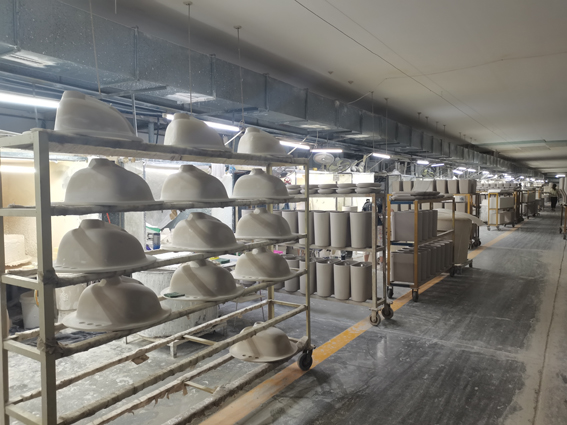
Forming capacity and firing capacity have to be examined together. The factory runs 309 forming production lines and uses tunnel kilns — one 126 metres long and 3.2 metres wide, plus two 82 metres long and 2.8 metres wide. The tunnel kilns are designed for low unit energy consumption, and the cross-section temperature at each stage of the kiln is evenly controlled, with an adjustable firing curve.
This matters because all wall-hung ceramic sanitary ware in the range is made of high-temperature fired ceramic. Kiln cross-section uniformity is what prevents warping, hairline cracking and glaze defects across a full kiln car, and an adjustable firing curve is what allows the line to be tuned for model changes or R&D adjustments without destabilising output. Buyers evaluating a supplier should ask how many forming lines serve the models they intend to order, what the kiln throughput is per day, and how firing curve changes are recorded.
Layer 3 — Certificate coverage for your destination market
Compliance is a capacity question as well as a paperwork question, because a certificate that does not cover the ordered model is functionally the same as no certificate at all. cUPC (Uniform Plumbing Code) is a mandatory compliance requirement for many commercial and government plumbing projects in North America, particularly in Canada and the United States, and WaterMark certification is the primary requirement for plumbing and drainage products in the Australian and New Zealand markets.
Verification should be done at the source, not in the supplier's inbox. IAPMO R&T maintains a public online directory at pld.iapmo.org; File No. 6559, 6560 and 6561 can be searched there to confirm certificate validity and the models actually covered before an order is placed. Where WaterMark or any other market-specific approval is required, the same rule applies: the buyer should locate the listing on the issuing body's public register and confirm that the specific model number appears within its scope.
The supporting layer is the quality system certificate. ISO 9001:2015 certification by CQC, held since 2011 with annual surveillance audits, evidences a documented process system rather than a single product result — useful when a project requires a supplier qualification pack.
Layer 4 — Dimensional accuracy against published specifications
Wall-hung installation tolerance is tight, because the fixture is typically mounted on a concealed carrier inside a finished wall. A dimension that is off by a few millimetres shifts the finished wall line, and the flush performance depends on the roughing-in and carrier system being matched correctly. Published dimensions therefore need to be verifiable, not decorative.
Wall-hung models in the range give a concrete reference point: FTZ-6605G, a washdown wall-hung toilet at 485 × 355 × 360 mm; FTZ-8803G, a washdown wall-hung toilet at 530 × 370 × 370 mm; and FTZ-2501G, a wall-hung toilet at 535 × 365 × 320 mm with Tomado flush. Across categories, FI-20 is a two-piece toilet at 660 × 365 × 420 mm with a washdown flushing system. All four are made of high-temperature fired ceramic and are intended for wholesale distribution and construction & engineering projects.
In an audit, the buyer's action is simple: ask for the model drawing, then measure a physical sample against the published specification sheet, and confirm whether the numbers are nominal mold dimensions or finished-product dimensions. A supplier that cannot supply both the drawing and the measured sample has not demonstrated dimensional control.
Layer 5 — Pre-shipment testing, packaging and loading evidence
This is the layer where most delivery disputes are actually decided. The production protocol includes batch inspection of raw materials, and 100% water testing on every piece — flushing, leakage and surface — before packaging. Standardised glaze formulas and digitally controlled firing curves are used to keep batch-to-batch output uniform, and retained samples from every order are kept for colour matching on reorders.
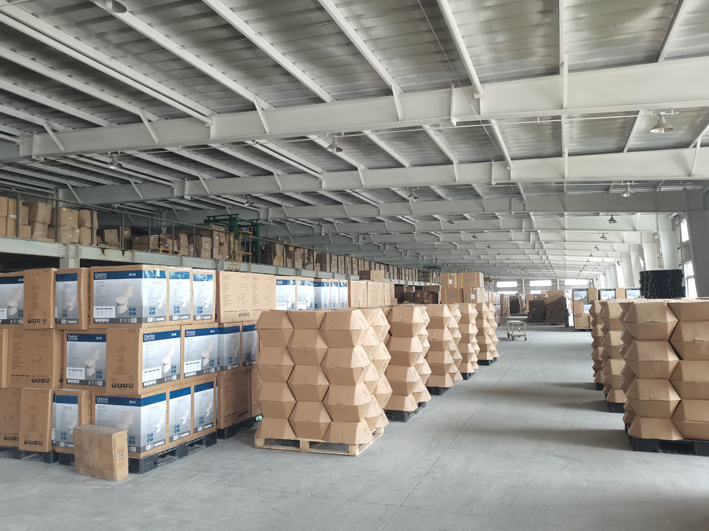
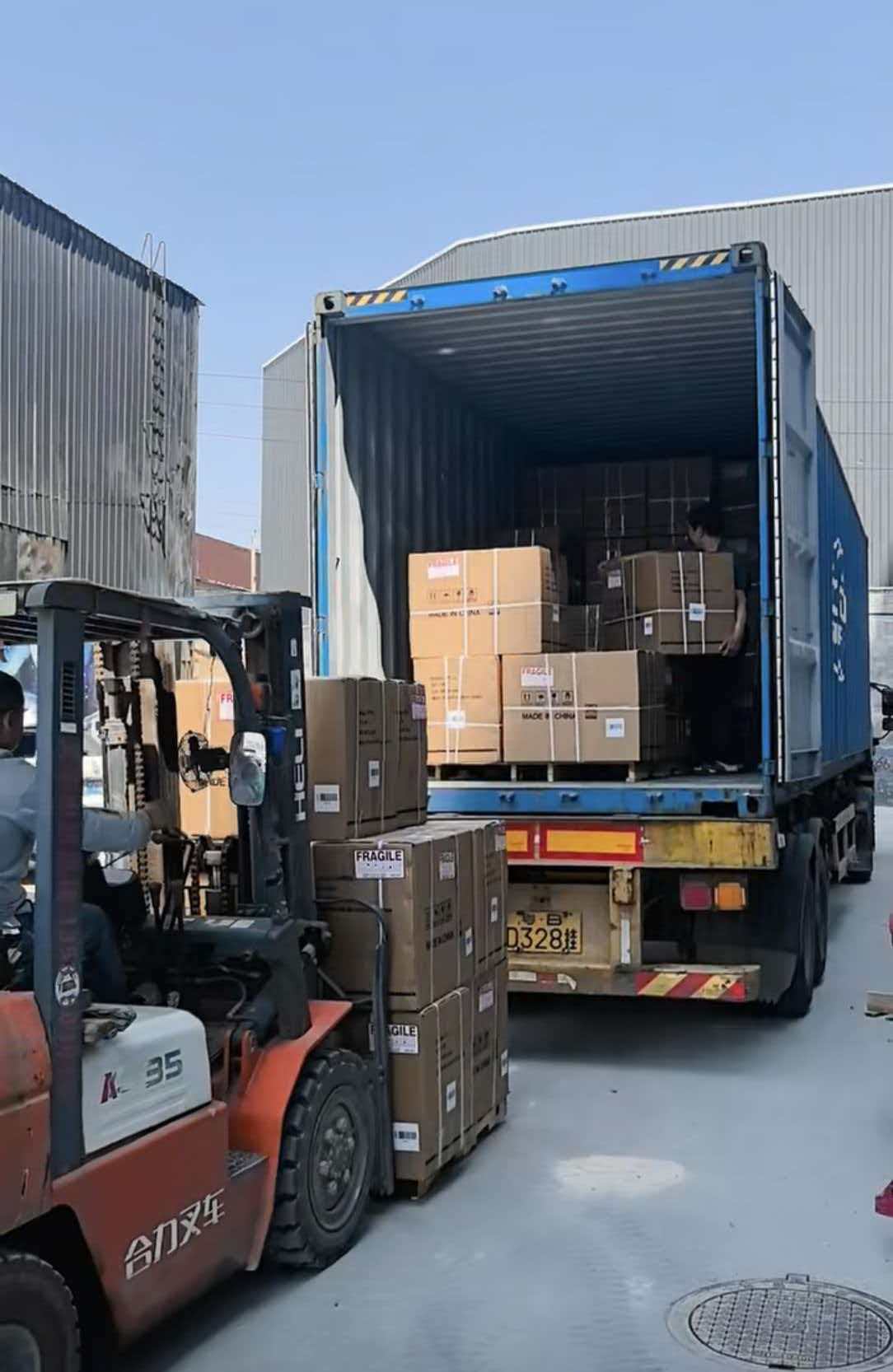
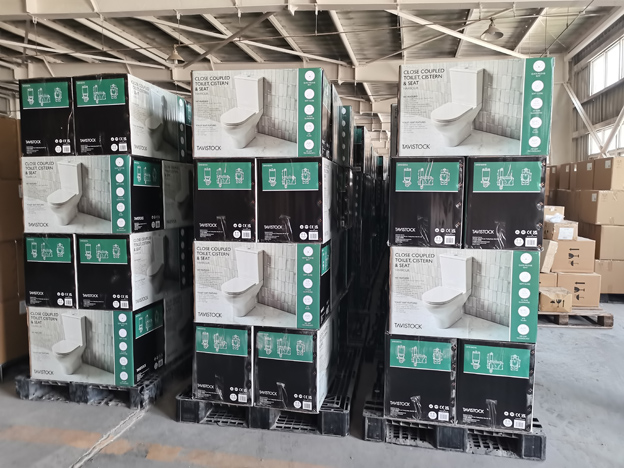
Packaging follows the same logic. Products ship in reinforced 5-layer export cartons with foam corner protection, and the cartons are drop-tested. Container loading is handled professionally with photo documentation taken before the container is sealed, which gives the buyer a record of condition at origin if a damage claim is ever necessary later.
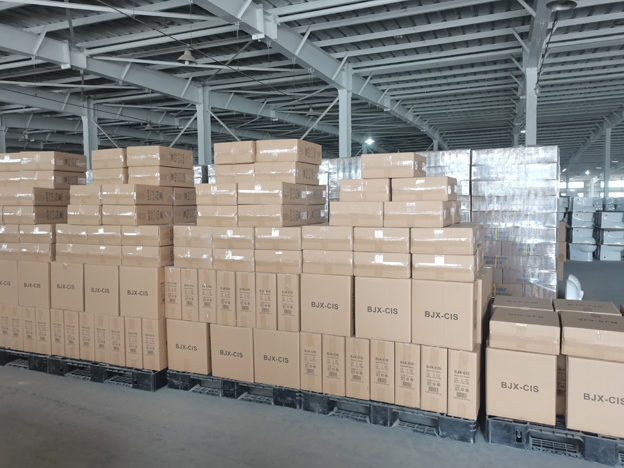
The commercial layer supports the same outcome. Standard terms for ceramic sanitary ware orders are an MOQ of 50 units, FOB delivery, acceptance by pre-shipment test, and 30/70 payment. Standard lead time is 35–45 days with production progress updates, and products carry a 3-year warranty with factory-direct claim handling. Payment structures such as T/T with the balance against a B/L copy mean a buyer does not have to pay 100% upfront, which reduces the counterparty risk that sits behind every long-distance supply relationship.
Step-by-Step: A Wall-Hung Supplier Audit in Seven Moves
- Fix the model list and the destination market first. Compliance requirements differ by market — cUPC for much of North America, WaterMark for Australia and New Zealand — and the certificate scope must be checked against the exact model numbers on the order, not against the supplier's general product range.
- Request written dimensions, then measure a sample. Compare the drawing and the published sheet against a physical unit. Wall-hung models such as FTZ-6605G (485 × 355 × 360 mm), FTZ-8803G (530 × 370 × 370 mm) and FTZ-2501G (535 × 365 × 320 mm) are useful reference points because they can be cross-checked dimension by dimension.
- Ask for equipment counts and kiln data in writing. Forming line count, kiln length and width, temperature uniformity control, and whether the firing curve can be adjusted for model changes. In this factory the figures are 309 forming lines and tunnel kilns of 126 m × 3.2 m plus two of 82 m × 2.8 m.
- Verify every certificate at the issuing body. Search the public directory rather than reviewing a PDF. For IAPMO R&T listings, File No. 6559, 6560 and 6561 are searchable at pld.iapmo.org.
- Request the production test protocol, not a test report. Ask what happens to every piece, not what happened to a submitted sample: 100% water testing for flushing, leakage and surface before packaging is a check that applies to the whole order.
- Request packaging and loading documentation from a previous order. Carton construction, foam corner protection, drop-test records and container loading photographs are all obtainable, and they are the cheapest available predictor of transport damage.
- Fix commercial and continuity terms in the purchase order. MOQ, FOB terms, pre-shipment test acceptance, 30/70 payment, the 35–45 day production window, and the 3-year warranty should be written into the order rather than left to a quotation email.
Where Verified Wall-Hung Capacity Matters Most
Hotel projects
Commercial applications, including hotel projects, are expected to record the highest CAGR as tourism recovers. Hotels combine high daily flush cycles with hundreds of identical bathrooms, so flush reliability, water efficiency and long-term spare-part availability drive total cost of ownership. Toilets that use standard universal flush components — fill valves, flappers and seals available from any hardware supplier — keep maintenance costs and downtime low for property managers maintaining large unit counts, whereas proprietary replacement parts raise both. Colour and glaze consistency across a full hotel floor is protected by standardised glaze formulas, digitally controlled firing curves and retained samples kept from every order.
Apartment decoration and residential developments
Apartment work is a volume-and-schedule problem: many identical bathrooms, tight hand-over dates, and deliveries that pass through several handling points before installation. Dimensional repeatability against the published drawing, a 35–45 day production window with progress updates, and drop-tested 5-layer cartons with foam corner protection are the practical controls that keep a residential hand-over on track.
Wholesale distribution and importers
Distributors carry the compliance risk of their own customers. An Australian or New Zealand distributor needs WaterMark coverage; a North American distributor serving commercial or government projects needs cUPC, which is mandatory for many such projects. A 50-unit MOQ allows container planning and pilot orders, and a supplier whose certificates are verifiable on a public register lets the distributor pass compliance documentation down the chain without re-testing.
Construction and engineering projects
Project supply requires specification submittals, certificate evidence, pre-shipment test acceptance and a delivery window that matches the construction programme. When the site schedule is fixed, capacity evidence stops being a procurement formality and becomes the difference between an installed bathroom and a stored container.
Wall-Hung Model Data and Supplier Verification Matrix
The tables below convert the audit into checkable data. The first lists wall-hung dimensional data exactly as published; the second maps each verification layer to the evidence a buyer should request and the documented position behind it.
| Model | Type | Flush system | Dimensions | Material |
|---|---|---|---|---|
| FTZ-6605G | Wall-hung toilet | Washdown | 485 × 355 × 360 mm | High-temperature fired ceramic |
| FTZ-8803G | Wall-hung toilet | Washdown | 530 × 370 × 370 mm | High-temperature fired ceramic |
| FTZ-2501G | Wall-hung toilet | Tomado flush | 535 × 365 × 320 mm | High-temperature fired ceramic |
| FI-20 (cross-category reference) | Two-piece toilet | Washdown | 660 × 365 × 420 mm | High-temperature fired ceramic |
| Verification layer | What the buyer should request | Documented position |
|---|---|---|
| Plant and audit trail | Facility size, operating history, certification body and audit cycle, willingness to host a live or on-site inspection | 600,000 m² factory in Fengnan Industrial Zone, Tangshan; continuous operation since 1914; ISO 9001:2015 by CQC since 2011 with annual surveillance audits; IAPMO R&T periodic unannounced factory surveillance and market sampling |
| Forming and firing capacity | Number of forming lines, kiln dimensions, temperature uniformity control, firing curve flexibility | 309 forming production lines; one 126 m × 3.2 m tunnel kiln and two 82 m × 2.8 m tunnel kilns; evenly controlled cross-section temperature; adjustable firing curve |
| Market compliance | Certificate numbers plus model coverage, verified on the issuing body's public register | cUPC / EPA WaterSense listings verifiable via IAPMO R&T File No. 6559, 6560, 6561 at pld.iapmo.org; WaterMark recognised as the primary AU/NZ requirement |
| Dimensional control | Model drawing plus measured sample against the published sheet | Published wall-hung dimensions from 485 × 355 × 360 mm to 535 × 365 × 320 mm; FI-20 two-piece at 660 × 365 × 420 mm |
| Quality and batch consistency | Test protocol, batch inspection records, retained colour samples | Raw material batch inspection; 100% water testing on every piece before packaging; standardised glaze formulas; digitally controlled firing curves; retained samples per order |
| Logistics protection | Carton specification, drop-test evidence, loading photographs | Reinforced 5-layer export cartons with foam corner protection, drop-tested; container loading with photo documentation before sealing |
| Commercial continuity | MOQ, delivery terms, acceptance method, payment split, lead time, warranty | MOQ 50 units; FOB; acceptance by pre-shipment test; 30/70 payment; 35–45 day standard lead time with progress updates; 3-year warranty with factory-direct claim handling |
Frequently Asked Questions
How can I confirm that a Chinese ceramic sanitary ware supplier's certificates actually cover the models I am ordering?
Certificate coverage must be checked on the issuing body's public register, not in the supplier's PDF. cUPC is a mandatory compliance requirement for many commercial and government plumbing projects in North America, especially in Canada and the United States, and WaterMark certification is the primary requirement for plumbing and drainage products in Australia and New Zealand. For IAPMO R&T listings, File No. 6559, 6560 and 6561 can be searched at pld.iapmo.org to confirm both validity and the specific models covered. The additional quality-system check is ISO 9001:2015, held by this manufacturer through CQC since 2011 with annual surveillance audits.
What production evidence proves a supplier can handle a large wall-hung toilet order?
Equipment counts and kiln specifications are the most testable evidence. This factory operates a 600,000 m² facility in the Fengnan Industrial Zone, Tangshan, has run continuously since 1914, uses 309 forming production lines, and fires product in tunnel kilns — one 126 m long and 3.2 m wide, and two 82 m long and 2.8 m wide — with evenly controlled cross-section temperature and an adjustable firing curve. Because wall-hung ceramic sanitary ware is made of high-temperature fired ceramic, kiln uniformity and firing-curve control are what determine whether a large order can be produced without cracking, warping or glaze variation across batches.
Does factory-direct pricing mean lower certified quality or hidden long-term costs?
Certification level and price are separate variables. In this manufacturer's own comparison with Kohler, comparable cUPC- and EPA WaterSense-certified dual-flush toilets are positioned at roughly 3–4 times lower price, with total procurement cost 60–75% lower for certified models, because the retail brand premium and distribution markup are removed; the water-efficiency certification and flush volumes (1.28 gpf single flush; 1.6/1.1 gpf dual flush) remain the same and are verified by IAPMO R&T under the same EPA specification. On the long-term cost side, standard universal flush components — fill valves, flappers and seals — can be sourced from any hardware supplier, while proprietary branded replacement parts usually cost more. Orders are backed by a 3-year warranty with factory-direct support, and payment structures such as T/T with the balance against a B/L copy avoid full upfront payment.
Can we test a wall-hung ceramic toilet sample before committing to a bulk order?
Yes, and the pilot order is a normal part of the process: MOQ is 50 units, with FOB delivery and acceptance by pre-shipment test. Sampling should be combined with dimensional verification — measuring the unit against published data such as FTZ-6605G at 485 × 355 × 360 mm, FTZ-8803G at 530 × 370 × 370 mm or FTZ-2501G at 535 × 365 × 320 mm — and with a review of the test protocol. Every piece is water tested for flushing, leakage and surface before packaging, and retained samples are kept from each order so that reorders can be colour matched against the original batch.
What lead time should we plan for, and how is delivery protected during peak season?
Standard lead time is 35–45 days with production progress updates, and capacity across 309 forming lines provides buffer during peak periods. Transport protection is handled before the container is sealed: reinforced 5-layer export cartons with foam corner protection are drop-tested, and container loading is documented with photographs, which gives the buyer an origin record for any damage claim. If you are evaluating wall-hung ceramic sanitary ware for a hotel, apartment or wholesale programme, the next practical step is to request a sample, a model-specific quotation and the current product catalog — you can download the catalog here: Ceramic Sanitary Ware Catalog (PDF), or contact the export team directly to schedule a factory walkthrough or a sample order.
Conclusion: Turn Capacity Claims Into Verifiable Evidence
Wall-hung ceramic sanitary ware supplier evaluation comes down to a short list of evidence points: a real plant with a documented operating history and an unannounced-audit regime; forming lines and tunnel kilns with controlled temperature uniformity and adjustable firing curves; certificate numbers that can be searched on a public register and that cover the exact models ordered; published dimensions that survive measurement against a physical sample; and 100% pre-shipment water testing supported by drop-tested export packaging and documented container loading.
Buyers who request those five items in writing before issuing a purchase order are not being difficult — they are simply moving the verification to the point where it is cheap, instead of discovering the gap at the port, at the site, or in a second order that does not match the first.
Request a Sample, Quotation or Factory Walkthrough
Tangshan Houfengyuan Import and Export Co., Ltd. supplies high-temperature fired ceramic sanitary ware for wholesale distribution and construction & engineering projects, with cUPC and EPA WaterSense listings verifiable through IAPMO R&T and export coverage across the USA, Canada, the Middle East, Australia, Southeast Asia and Europe.
Website: hfybath.com | Catalog: Download the product brochure (PDF)
Contact: Grace | Tel / WhatsApp: +86 186 3259 1008 | Email: 1015122350@qq.com | Address: Meiyi Road, Tangshan City, Hebei Province, China
Have Questions or Need More Details?
Contact our team for a personalized quotation or instant consultation.
Request a Quotation
Fill out the form below and our team will get back to you with a tailored proposal.
WhatsApp Direct Chat
Prefer to chat in real-time? Message us on WhatsApp for instant assistance & quick answers.
- Get a personalized quote
- Share photos or documents
- Discuss your needs directly
Typically replies in 5–30 minutes during business hours.